Skip to content
Evode Manirahari

Product-Minded Software & AI Engineer

EvodeManirahari

I build software for real-world problems where reliability, judgment, and usability matter.

I design and build full-stack products across applied AI, voice systems, mobile applications, backend infrastructure, and human-centered software.

Résumé PDF pending — placeholder file in place

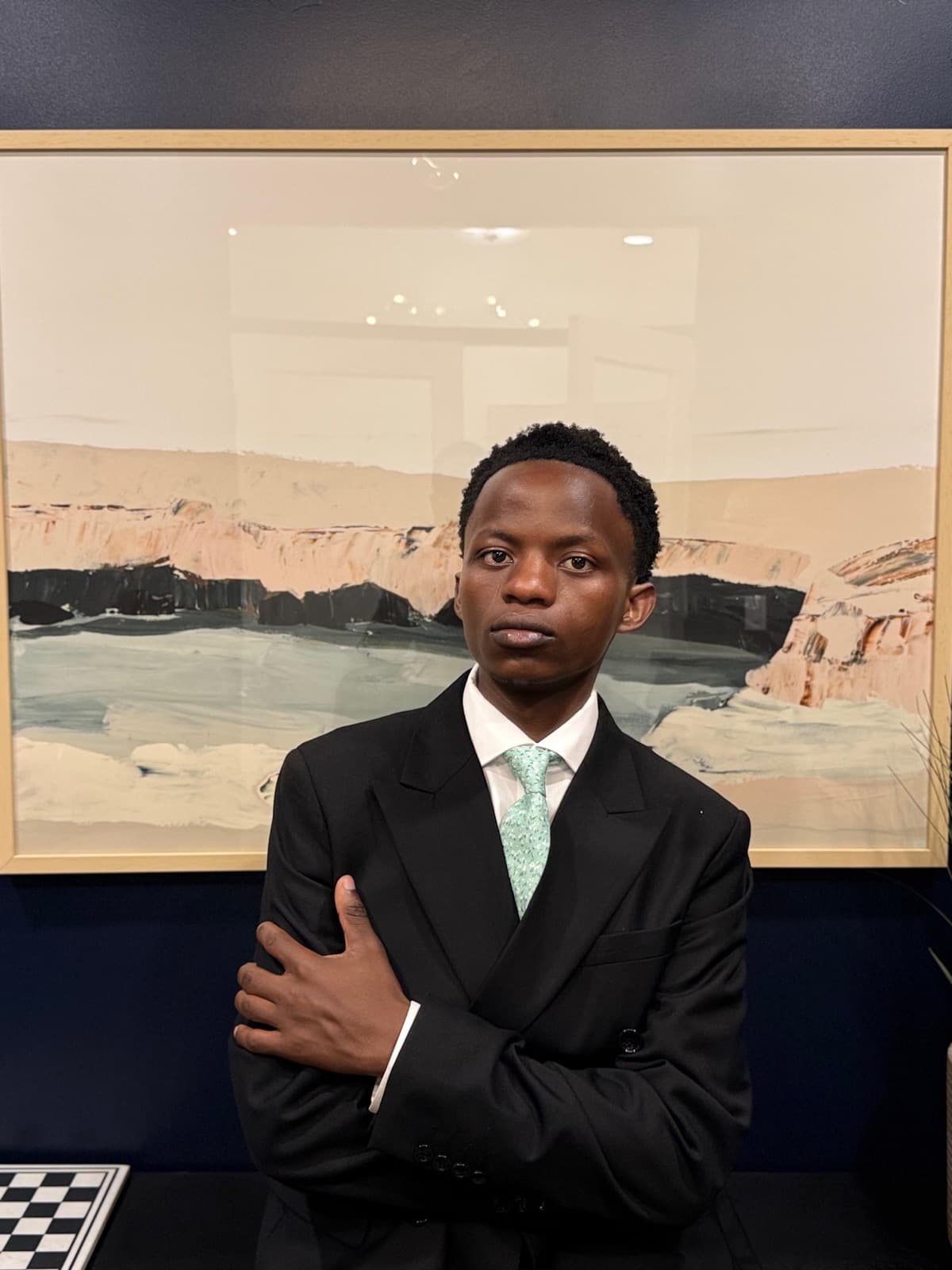
Evode Manirahari, arms folded, in front of a framed landscape painting.
Based in
San Francisco Bay Area
Availability
Open to software engineering, product engineering, full-stack, backend, and applied AI opportunities.

01At a glance

The short version

Primary
Full-stack and product engineering
Strengths
Backend systems, applied AI, mobile, APIs, product design
Current focus
Building software for physical work and knowledge capture
Based in
San Francisco Bay Area
Education
B.S. Computer Science, Sonoma State University — May 2027
Seeking
Software engineering, product engineering, backend, full-stack, and applied AI roles
Read the full résumé

Résumé PDF pending — placeholder file in place

02Selected work

Four systems

Each one started from a specific problem someone actually has. For each I have written what I built, what it proves, and what it does not.

01FlagshipApplied AI · Mobile · Backend · Infrastructure

ACT — Actober AI

Teaching software what experienced technicians notice.

Current build2026

When a thirty-year HVAC technician retires, the diagnostic shortcuts that keep callbacks low on that company's own install base leave with them. Nobody wrote them down, because writing them down was never the job.

Key contribution

Designed the capture workflow, implemented the React Native recording experience with glove-friendly marking and retryable uploads, built the FastAPI backend and its Postgres-backed job queue, wired transcription and moment detection into a review-gated publishing pipeline, and shipped the whole loop against a deployed backend.

Proof point

The Capture → Detect → Ask → Structure → Review → Teach → Measure loop runs end to end against the deployed backend at act-api-evode.fly.dev.

Role
Builder and product owner — mobile, backend, admin, infrastructure
Stack
React Native, Expo, TypeScript, Python, FastAPI, PostgreSQL, SQLAlchemy, Alembic
Stage
In active development. Deployed backend and working end-to-end loop; no field capture and no paying customers yet.
  1. 01

    Capture

    One button, gloves on, consent set

  2. 02

    Detect

    Frames, transcript, ranked moments

  3. 03

    Ask

    Expert answers after the job

    Human gate

  4. 04

    Structure

    Card with cue, trap, safety, quiz

  5. 05

    Review

    Lead tech approves or rejects

    Human gate

  6. 06

    Teach

    Apprentice library, cited

  7. 07

    Measure

    Callback and ramp signals

  8. Loop

    Measurement feeds the next capture: which jobs to record, which moments were worth keeping.

02Applied AI · Voice · Backend · Evaluation

SecondLine

A phone line that gets better after every call.

Hackathon build2026

A florist or clinic that misses a call usually loses the customer — most callers do not try again, they call the next shop. Voicemail does not recover them.

Key contribution

Built the business brain and its eleven typed tools so the model could never invent business state, wrote the sixteen-scenario evaluation harness and the improvement engine that turns each failure into a validation rule, escalation rule, prompt patch, or memory update, and debugged the production transport bug that automated voice testing exposed.

Proof point

Local evaluation harness: 16 scenarios graded on 6 dimensions; pass rate moved from 88% to 94% and unsafe actions from 1 to 0 after the improvement loop ran.

Role
Built at the YC Voice Agents Hackathon (Pipecat · Cekura · NVIDIA · AWS · Twilio)
Stack
Python, Pipecat, Twilio, WebRTC, SQLite, FastAPI, NVIDIA Nemotron, Claude
Stage
Built in one day at the YC Voice Agents Hackathon. Deployed and demonstrable; not a running business.

Model intent

“Add a lily bouquet to this order”

Tool layer validation

Allergen guard, low-confidence escalation

Business state

Written only if validation passes

Blocked

Caller has a recorded lily allergy. The write is refused and safe alternatives are offered instead.

Why below the model

The same rule in a prompt is a suggestion. In the tool layer it survives every future prompt change.

03Backend · Imaging · Geospatial · Applied AI

DrCrop

Turning drone flights into acres not sprayed.

Deployed prototype2026

Vineyard treatment is commonly decided a block at a time, even though vine condition varies row to row. The imagery that would show that variation is cheap to collect; the decision layer on top of it is not.

Key contribution

Built the six-stage drone-to-prescription pipeline end to end — vegetation index, row-aware masking, zoning, and a hand-rolled PNG encoder, PDF builder, KML and GeoJSON writer with no new dependencies — plus the before/after verification diff that reports the acreage a prescription would have left untreated.

Proof point

Six stages — intake, ExG vegetation index, row-aware mask, zoning, export, verify — run end to end on a synthetic Sonoma vineyard orthomosaic and produce every export format.

Role
Builder — imaging pipeline, exports, verification, and web surface
Stack
Node.js, JavaScript, Raster processing, GeoJSON, KML, PDF generation, Claude, Fly.io
Stage
Deployed prototype running on synthetic orthomosaics. The survey drones fly and capture imagery, but no vineyard flight has been processed and no grower has used it.
Management zone mapA schematic vineyard block of twelve by seven cells. Most cells are skip zones. Two clusters are marked spray, each ringed by scout cells. Vine rows run vertically through the block.
  • Spray
  • Scout
  • Skip

04Applied AI · Backend · Product judgment

FocusGate

Staying reachable without staying distracted.

Experiment2026

Do Not Disturb decides on sender, never on content. "ok love you" interrupts exactly as hard as "can you cover tonight?" — so students who need the shift keep their phone on and lose the study block.

Key contribution

Made the call to build a server-side relay instead of another app blocker — because the OS already blocks apps and cannot read content — then implemented the triage path with a keyword trust floor ahead of the model, fail-open behavior on every error and timeout, and the block state machine that holds, auto-replies, and digests.

Proof point

Every uncertain path biases toward delivery: an error, a timeout, or an ambiguous verdict forwards the message. A false interrupt is mildly annoying; a missed shift offer costs money and trust.

Role
Builder — product judgment, relay backend, triage design
Stack
TypeScript, Node.js, Twilio, Claude, Webhooks, Vitest
Stage
v1 relay backend and operator dashboard, running locally. The concierge test that would validate it has not been run.
  • Contains an explicit urgency keyword

    Deliver now

    Deterministic floor. Runs before the model, so it holds when inference does not.

  • Model judges it urgent

    Deliver now

    Content-level judgment — the thing the operating system cannot do.

  • Model judges it not urgent

    Hold + auto-reply once

    The sender learns the student is studying, so they do not escalate.

  • Error, timeout, or ambiguity

    Deliver now — fail open

    A false interrupt is annoying. A missed shift offer costs money and trust.

Three of four paths deliver. That asymmetry is the specification, not a tuning accident.

03Capabilities

What I work with

Everything listed here is used in a project on this site. Nothing is rated, and nothing is here for search engines.

Frontend

ACT admin · DrCrop · FieldCard · this site

  • React
  • Next.js (App Router)
  • TypeScript
  • Tailwind CSS
  • Responsive layout systems
  • Accessibility (WCAG 2.2 AA)
  • Zustand state management
  • Server Components

Backend

act-api · SecondLine · FocusGate · DrCrop

  • Python
  • FastAPI
  • Node.js
  • REST API design
  • WebSockets
  • PostgreSQL
  • SQLAlchemy (async)
  • Alembic migrations
  • Durable job queues
  • Multi-tenant isolation
  • JWT authentication
  • Webhook signature verification

Applied AI

ACT · SecondLine · FocusGate · FieldCard

  • LLM integration (Anthropic SDK)
  • Structured outputs
  • Tool calling with typed schemas
  • Retrieval and embeddings
  • Speech-to-text (Deepgram)
  • Text-to-speech
  • Evaluation harnesses
  • Guardrails and refusal boundaries
  • Multi-step agent workflows
  • Prompt caching

Mobile

ACT mobile client

  • React Native
  • Expo
  • Camera and media capture
  • Offline upload retry and resume
  • Secure session storage
  • Field-first interaction design

Infrastructure

act-api · DrCrop · SecondLine · Agentbase

  • Docker
  • Fly.io
  • Vercel
  • Supabase
  • Cloudflare R2
  • GitHub Actions
  • CI/CD pipelines
  • Structured logging and observability

04Current focus

I am currently exploring how software can preserve judgment that normally disappears when experienced workers leave.

Most of what a thirty-year technician knows was never written down, because writing it down was never the job. ACT is my attempt to capture that reasoning from real work — with the original footage as proof, a human approving every lesson, and honest measurement of whether any of it lands.

05Background

Experience

The entries that matter for engineering roles. Full history, leadership, and recognition are on the about page.

  • 2026 — present

    Founding engineer — ACT

    Actober AI (independent project) · San Francisco Bay Area

    Building the capture-to-lesson system for HVAC field work: React Native client, FastAPI backend, media pipeline, and review-gated publishing.

  • Nov 2024 — Jul 2025

    Treasurer, Region I

    Student Senate for California Community Colleges (SSCCC) · Sacramento, CA

    Held the regional budget: tracked expenses and reimbursements, built reporting, and taught other students how the process worked.

  • Jan 2024 — Jun 2025

    Software Developer & Student Support

    Mendocino College · Ukiah, CA

    Two concurrent campus roles over the same period: software development for the college's Sustainable Technology Program, and front-line technical support for students, staff, and visitors.

  • Expected May 2027

    B.S. Computer Science

    Sonoma State University · Rohnert Park, CA

    Graduating May 2027.

06Archive

Also built

Hackathon builds, experiments, and research spikes. Listed with the stage they actually reached — most of these are not products.

  • Rebuilt ACT's voice-debrief slice as clean, standalone code: describe a job by voice, get asked two sharp follow-up questions, receive a structured teachable card.

    Voice · Next.js · Structured outputs

    Hackathon build
  • Ask your security cameras what happened instead of scrubbing hours of footage — a local, on-device voice agent over multi-camera video.

    On-device AI · Video retrieval · Voice

    Hackathon build
  • Scoped identity, approval, and audit for AI agents before they touch real APIs, CRMs, and internal tools.

    TypeScript · Agent safety · Audit

    Experiment
  • Robot QA without a terminal: upload a mission log, replay it in simulation, detect collisions and path deviations, compare policy versions.

    Robotics · Simulation · Python

    Experiment
  • Probabilistic open-play simulation for football — sample plausible futures from tracking data instead of predicting one.

    Machine learning · Multi-agent simulation

    Research
  • 2026

    Tracer

    Turns a plain-English board idea into structured PCB requirements, a formal spec, and a validation report. Built with a team.

    FastAPI · React · Requirements formalisation

    Hackathon build
  • On-device repair guidance built for the Cactus × Google DeepMind × Y Combinator Gemma voice-agent hackathon.

    On-device models · Voice

    Hackathon build

More on GitHub.

07About

About Evode Manirahari

I am Evode Manirahari, a software engineer and product builder based in the San Francisco Bay Area. I am interested in systems that have to survive contact with the real world: technicians wearing gloves, businesses missing calls, students protecting their attention, and growers making decisions across large fields.

I work across product design, frontend, backend, mobile, infrastructure, and applied AI because difficult problems rarely fit neatly inside one job title.

08Contact

Let's build something useful.

Bring me a problem that refuses to fit inside a neat box. I am most useful early — when the data model, the interface, and the question of what is actually true are all still open.

manirahari@sonoma.edu
Location
San Francisco Bay Area

Open to software engineering, product engineering, full-stack, backend, and applied AI opportunities.

Résumé PDF pending — placeholder file in place